Learn the vocabulary of remembrance, ofrendas and regional Día de Muertos traditions.
Step 1 of 3
Spanish Day of the Dead and remembrance words
El Día de Muertos, also called el Día de los Muertos, centers on remembering people who have died. Traditions vary across Mexican communities and families.
El difunto/la difunta means a deceased person. El alma is feminine despite its singular article: las almas.
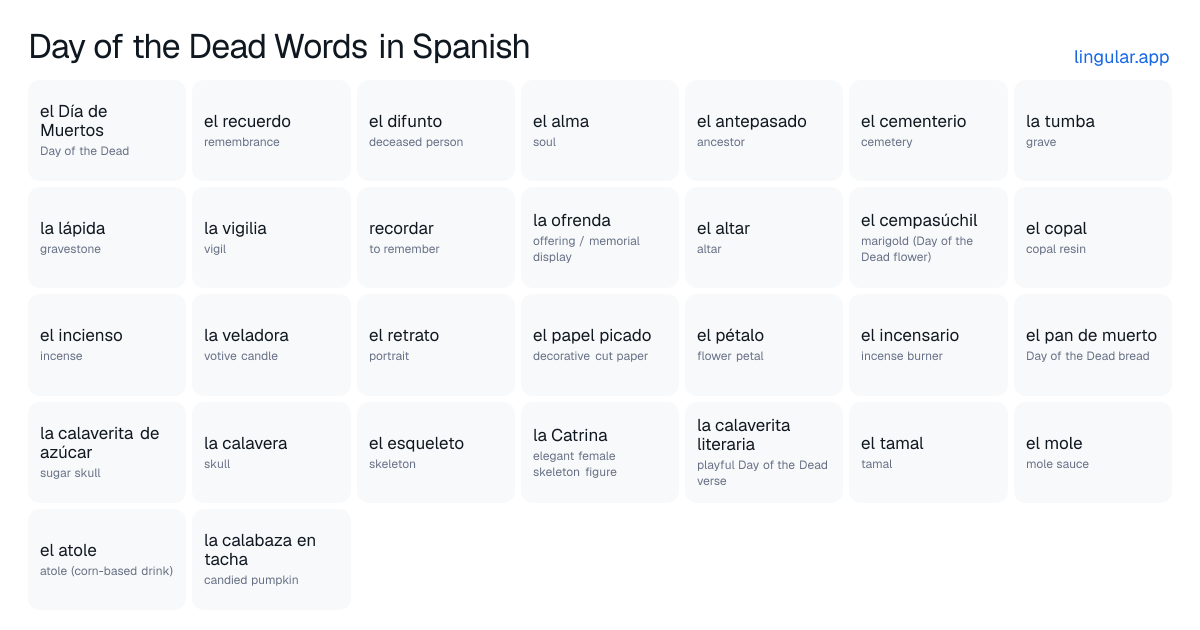
el Día de MuertosDay of the Dead · el DEE-ah deh MWEHR-tohs
el recuerdoremembrance · el reh-KWEHR-doh
el difuntodeceased person · el dee-FOON-toh
el almasoul · el AHL-mah
el antepasadoancestor · el ahn-teh-pah-SAH-doh
el cementeriocemetery · el seh-mehn-TEH-ryoh
la tumbagrave · lah TOOM-bah
la lápidagravestone · lah LAH-pee-dah
la vigiliavigil · lah bee-HEE-lyah
recordarto remember · reh-kor-DAHR
Spanish words for Day of the Dead ofrendas
La ofrenda is an offering or the display assembled to honor the deceased; el altar is its altar structure. Common elements include photographs, candles, flowers and favorite foods.
El cempasúchil is the marigold strongly associated with these traditions. El copal is an aromatic resin used as incense.
la ofrendaoffering / memorial display · lah oh-FREHN-dah
el altaraltar · el ahl-TAHR
el cempasúchilmarigold (Day of the Dead flower) · el sehm-pah-SOO-cheel
el copalcopal resin · el koh-PAHL
el inciensoincense · el een-SYEHN-soh
la veladoravotive candle · lah beh-lah-DOH-rah
el retratoportrait · el reh-TRAH-toh
el papel picadodecorative cut paper · el pah-PEHL pee-KAH-doh
el pétaloflower petal · el PEH-tah-loh
el incensarioincense burner · el een-sehn-SAH-ryoh
Spanish Day of the Dead food and art terms
El pan de muerto is a seasonal bread with regional variations. La calaverita literaria is a playful verse about death, distinct from an edible sugar skull.
La Catrina names the elegant skeleton figure associated with Mexican art and the holiday. Use family words when speaking about the people remembered.
el pan de muertoDay of the Dead bread · el PAHN deh MWEHR-toh
la calaverita de azúcarsugar skull · lah kah-lah-beh-REE-tah deh ah-SOO-kahr
la calaveraskull · lah kah-lah-BEH-rah
el esqueletoskeleton · el ehs-keh-LEH-toh
la Catrinaelegant female skeleton figure · lah kah-TREE-nah
la calaverita literariaplayful Day of the Dead verse · lah kah-lah-beh-REE-tah lee-teh-RAH-ryah
el tamaltamal · el tah-MAHL
el molemole sauce · el MOH-leh
el atoleatole (corn-based drink) · el ah-TOH-leh
la calabaza en tachacandied pumpkin · lah kah-lah-BAH-sah en TAH-chah
learnt
0
mastered
0
learning
0
struggling
0
due for review
0
Learning Learnt Mastered Struggling
Pick a word to hear it and see when it's due next.
0 / 30 learnt
Day of the Dead Words in Spanish: the full list
Review the vocabulary by topic, then use the printable worksheet to check your recall.
Quick answer:Day of the Dead is el Día de Muertos, remembrance is el recuerdo, deceased person is el difunto, soul is el alma, ancestor is el antepasado, cemetery is el cementerio, grave is la tumba, gravestone is la lápida, vigil is la vigilia, and to remember is recordar.